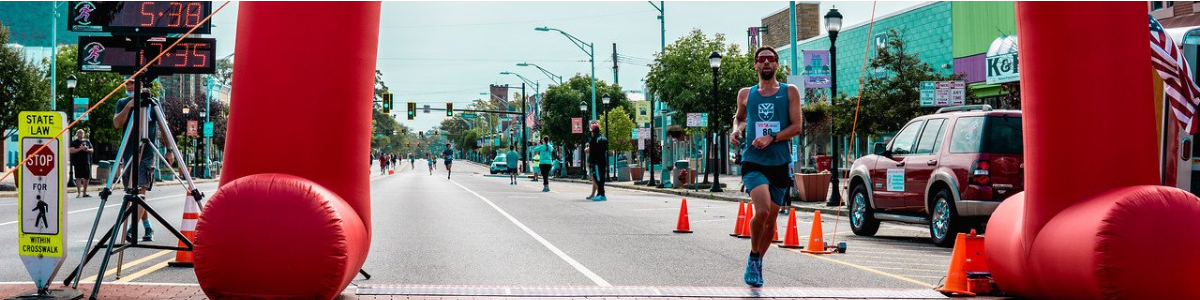
Did you know that in 2014 there was roughly ½ a million Americans who completed a marathon in the US that year?
If you’re NOT one of those people, don’t be afraid, there’s a LOT OF YOU out there.
Until 2019, I didn’t factor into that statistic either, so it’s fine that you haven’t run a marathon. But if you’re brand new to running – like have never run a race before – then this post is for you.

Everyone Starts a Rookie
There was a time when each and every one of us was a new runner. It might have been when you were 13 or 14, like me, or maybe you started later in life. Each of us had to figure out all the basics just like you are now. It’s okay to be unsure and possibly even confused. This post will help you with your questions and get you on the path to success.
Getting Started
New to running and not in any kind of shape? You’ll want to spend a fair amount of time getting in overall running shape before you even think about training for a race. What does that mean? It might mean starting a Couch to 5k program or the run/walk method. If even that’s daunting for you, you’ll want to start by sampling different workouts: take a spin class, try a yoga class… Anything that will help you get in shape will ultimately help you become a better, stronger runner.
Are you already in shape? Maybe a former athlete? You may only need 3-4 weeks to build a running routine and then you can start training for a specific race. Either way, you’ll want to prep your body (and your mind) for the training you’re about to undertake.

When to Start Marathon Training
Experienced runners have a leg up compared to their new counterparts. Years of mileage and experience go a long way in preparing to run a marathon. Runners that are in “shape” and have been running should expect a training plan somewhere between 16-20 weeks for a marathon training program.
Newer runners who haven’t run before should spend time before they start officially training for the race. Your body will be expected to go through a lot, and it’s important to prep your body and your mind for the training you plan on doing. A training plan for a brand new runner should be 22-25 weeks – mainly spent easy running and accumulating “safe” exercise minutes per week.
All runners are different so each situation is unique. If you come into a training plan already in shape you do not need as many weeks to specifically prepare for a race.
When should you start training for your next big race? #TrainwithMarc will tell you in his latest blog post!
Tweet
Half Marathon Training
Half marathon runners with experience should look for 12 to 16 weeks of a training program. Some plans will be a bit longer and some a bit shorter, but there should be some pre-training that has occurred.
Inexperienced or brand new runners seeking to complete a half marathon should aim for 16 to 20 weeks of a training plan.

5k and 10k Training
A new runner looking to run a 5K and just complete it should look somewhere in the neighborhood of 8 to 12 weeks. Depending on the goals of this new runner would determine the quality and quantity of a training program.
Recovery Period
The history of a runner will determine how long and how much of a training plan you need to follow. For example, there are some professional runners who just completed the New York City Marathon and are now preparing for the Olympic Trials Marathon. Their time frame from marathon to marathon is 13 weeks which is rather short turnaround.
A marathon runner should aim for two or three marathons in a 12 month span. This allows for a complete build up, adequate recovery and another solid chunk of training.

Half marathon runners could probably get away with four to 5 half marathons in a 12 month period. Of course, do some runners do more than double what I just said, yes. But to properly prepare for and recover from a longer race like this requires time.
5k runners can look to run around two 5k races a month.
If all you are doing is racing, every weekend, there isn’t any time to do quality work out sessions and long runs that will prepare you for racing well.
Summary
Training for a race is supposed to be fun and enjoyable. Will you have some days and some runs that don’t go well, yes, of course. If you give yourself enough time to properly prepare for your race and allow your body to fully recover after the race, then there is little in the way from stopping you set hearty PRs. Of course, being a bit picky and selective goes a long way in allowing for the recovery process to happen.
Did you find this article helpful? Let me know by leaving a comment below or join the conversation on Twitter, Instagram or Facebook.
Searching for a running coach? TrainwithMarc has flexible schedules, dynamic plans, and access to a coach who’s worked with every type of runner.
TrainwithMarc will design a training plan based on your needs, running history, and your goals.




TrainwithMarc’s Social Media links ⬇️
Website: trainwithmarc.com
Instagram: @TrainwithMarc.run
Threads: @TrainwithMarc.run
Facebook: @TrainWithMarc
TikTok: @Run_Coach_Marc
Twitter: @marcpelerin


Discover more from TrainwithMarc
Subscribe to get the latest posts sent to your email.

 TrainwithMarc
When I transitioned to full marathons (from half marathons), the training didn’t seem any tougher…just longer long runs LOL. I’m glad I had that base, and several 13.1’s behind me. (sorry, I think I left my comment in the wrong place above)
LikeLike
I agree with what Kim said above. I just felt like the training took so long, but it didn’t seem harder – probably because I’m not a super fast runner anyways lol
LikeLike
I agree – the training wasn’t all that different – more time on your feet.
No worries about the other comment – I was testing out if people would contact me for coaching through it 🙂
LikeLike
It certainly took longer for me – 12 mile long runs vs 20 milers… Lots more planning + all that extra time running.
LikeLike
Well-articulated and thought-provoking. Daniel Dantas
LikeLike