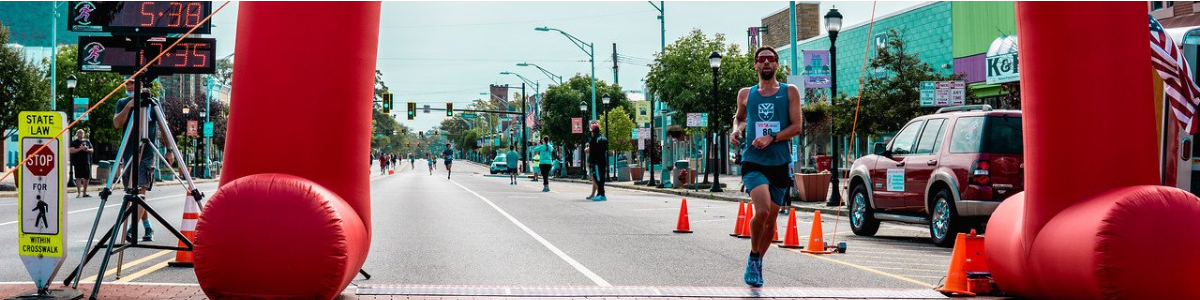
Just like your birthday, race week should be celebrated.
As a runner, it’s often hard to get in all of the training you’d like to do and even when we do have the time, sometimes we get nicked up along the way.

So to make it to the start line of any race is a victory!
Some of us know from our middle school or high school days that we raced often. We have been known to race on Saturday at an invitational, turn around and double or triple at a dual meet, and then come back on the weekend and run another invitational meet.
Those days sound exhausting just typing it out.
Luckily, or thankfully, as adult runners we are not beholden to any race schedule. More importantly, there aren’t too many midweek races to tempt us to run.
So instead, we get to be picky and choose wisely which races we will run. And since we don’t have to race multiple times a month, we can space out our races leaving us with more time to get in solid training blocks.
In this post, I’ll be reviewing what we should do 3 days before our race and 3 days after our race.

Race Week:
If we have a Saturday race, that means we can get in some decent mileage on race day. Heck, I think it’s even acceptable to make race day your long run day. *I know many high school and college runners would turn around the next day and do a long run on Sunday, but we’re not that anymore.
Knowing that Saturday is race day and potentially long run day, this makes Friday a really easy run with some good striders at the end of it.
A Friday morning run is best because it allows for a bigger recovery window before your race (24+ hours). Friday evening is doable, but less ideal (shorter recovery time until race). Depending on your mileage, I can see 3-6 miles (20-50 minutes) of easy running.
Thursday – 2 days before a race – has been different for me over the years. As a runner, I liked having that day off (no running), but I also know that as a coach, some runners are built differently and have much higher mileage than I do/did. So, I absolutely prescribe Thursdays as flex days, meaning that some of us may like to take off and others can run upwards of 6-8 miles 2 days before a race. Like I said, all runners are different, so we can’t all do the same thing and think it’ll work out.
Again, I’m not one of those high-mileage runners anyway, but I know that some runners can do this.
Wednesday
I have prescribed all kinds of runs for my runners 3 days out from races.
For some runners, 3 days out from race day is the perfect time to do a workout. It’ll be out of their legs for race day, but it’s also the stimulus that they are looking for.
If it’s not a peak race, I feel comfortable suggesting a hearty workout. Most likely, this will be mostly threshold, but if we’re in the part of a training cycle where some turnover will help them, then it might be a combination workout: a little bit of threshold and a little bit of speed.
For others, a simple workout like repeat 400s is great because 400 meters is short enough that you feel like you’re working, but not long enough that you have to mentally strain just to stay engaged.
Higher mileage runners can handle more volume the week of the race while lower mileage runners can gain from a small taper leading up to the race.
Okay, so that’s the three days before a race.

The Days After Your Race
Are you peaking for your race or have more races lined up in this training cycle? If you are peaking, you are gearing all your training towards this one race. If you aren’t peaking, there should be more racing in the coming weeks or months.
If you are getting ready for your peak race, the few days after your race are YOURS! You can do almost anything that pleases you. But what you should not be doing: running.
After a peak race, enjoy yourself. Stay up late, sleep in, and allow yourself the break from “being on” while training.
Race Day
One of the most important things you can do, especially if you have more races in your training cycle, is a cool down run after your race. This is the best way to start that recovery process.
Keep in mind that some of what I’m going to say may or may not fit your current running situation:
- For higher mileage runners or runners who have more races: 2+ miles should be adequate for a cool down. For those who are racing shorter races (5k-10 milers) running a 2 mile cool down makes sense. Those that tend to have higher mileage may get more miles in on this day, but that’s your choice. I always say, when in doubt, run more on race day.
- For higher mileage runners, a 3 mile cool down is possible, but so is doing a 1 mile cool down, doing some work at threshold or interval pace, and then cooling down more. After some 5k races when I was doing decent mileage, I might do a 3 mile warmup, race the 5k, jog 1/2 mile, do 4 x 800 at threshold, then cool down 1.5 more miles.
- For lower mileage runners, definitely make race day your long run day. Get in a proper warmup, run your race, and if possible, at least a 10 minute cool down. Your total volume on a 5k race day can be (and should be) at least 6.5+ miles (2 mile warmup, 3 mile race, 1.5 mile cool down.
- I will say, during HS we would do a 3 mile warmup, run a 5k, and then cool down 3 miles. Is that expected of you? Absolutely not. But just know that some runners are definitely doing that and much more.
- For those racing a half marathon and then have more races later, you might do a 1 mile warm up, race the half, then do a half mile cool down. Something is going to be better than nothing, that’s for sure.
So now you have gotten your race day (and your long run day) finished, it’s time to start thinking about the future.
If you’re on your break, enjoy it. If you are not, then you’ll need to take care of your body so you can get back to training.
Racing is inherently hard on your body, so taking training easy for the next 3 days will help you get back to normal training faster.
The day after your race is your first time to make sure you are not injured or have anything preventing you from normal running.
Taking those days easy does not necessarily mean NOT running. It just means taking the effort level and turning it down a bit. For those who are cooks, you’re gonna let it simmer.
This first day after your race can be anywhere from 20 minutes at a shuffle all the way up to a 6-8 mile run. Again, your weekly mileage dictates what you’re doing post-race.
Higher mileage runners can handle more volume the week after the race while lower mileage runners can benefit from a taking it easy and making sure you’re still healthy.
This is a perfect day to pre-schedule a massage or deep tissue work with a specialist. And if you can’t get in to see someone, then foam rollers, massage guns, and recovery tools are your best friends.
Two days after your race can be an off day if that’s typically when you would take one or an easy running day. It also might be a good day to get in some cross training if that’s something you are comfortable with.
Three days post-race and you should now be feeling almost back to normal. If your mileage is decent, you should be ready for some kind of workout. I like prescribing fartleks for post-race workouts because we don’t know exactly how someone is going to feel until they are out there. Fartleks allow flexibility in effort lengths which is beneficial if you don’t feel great.
For those low-mileage runners, this might be a day to get back to workouts, but keep the volume to about 75% of what you’d normally do during a workout.
Okay, so that’s what three days after a race might look like. You might need something else, but as a guide, this should help you.
Your race may be over, but recovery is important too! How do you take care of your body in the days after crossing the finish line? I’d love to hear about your post-race routine—do you focus on rest, stretching, or refueling? If you have questions about my tips or need advice on speeding up recovery, drop a comment or send me a message. Let’s work together to make sure your body bounces back stronger and ready for your next challenge!
Have questions or want to get started with your own training plan?
Fill in this form and let’s get started:


Want my weekly running newsletter?
- Mental Prep Work For Your Next Race
- Has to Be a Top 4 Race Weekend For Me
- Do some running on your race course so you have an advantage against your competition
Looking for running resources?
Find me on social media!
Searching for a running coach? TrainwithMarc has flexible schedules, dynamic plans, and access to a coach who’s worked with every type of runner.
TrainwithMarc will design a training plan based on your needs, running history, and your goals.




TrainwithMarc’s Social Media links ⬇️
Website: trainwithmarc.com
Instagram: @TrainwithMarc.run
Threads: @TrainwithMarc.run
Facebook: @TrainWithMarc
TikTok: @Run_Coach_Marc
Twitter: @marcpelerin
Discover more from TrainwithMarc
Subscribe to get the latest posts sent to your email.

 TrainwithMarc